
Encamp Devlog, October 2026
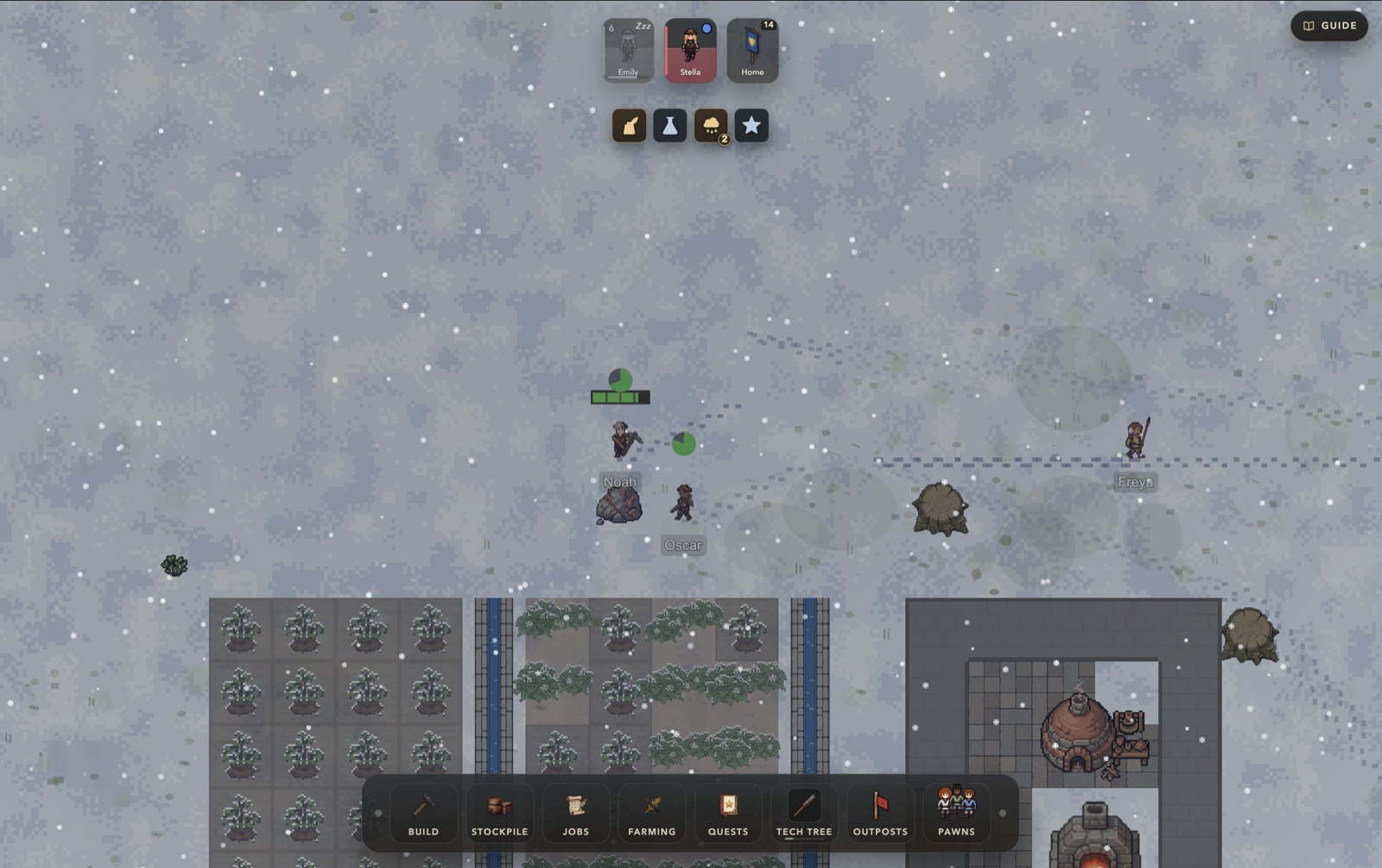
The October update adds seasons and the cold, the game's first sound effects, a medical system, farm animals and reworked kitchens, pawns with trades, and a rebuilt first hour beside another player's camp.
Seasons and the Cold
Seasons are finally here. A year lasts close to three hours of play, with winter the longest season.
Crops stop growing in frozen ground, so a colony has to put food by before winter, and a young colony gets gentler first winters while it finds its feet. A new player's first session starts in summer, so nobody's first evening is a blizzard.
Pawns now have a body temperature, and cold slows down walking and work. Caught out in a snowstorm for too long, a shivering pawn will collapse and die of exposure unless someone carries them to a warm bed. Indoors, heaters burn fuel to keep rooms warm, while outdoors pawns head for the campfire.
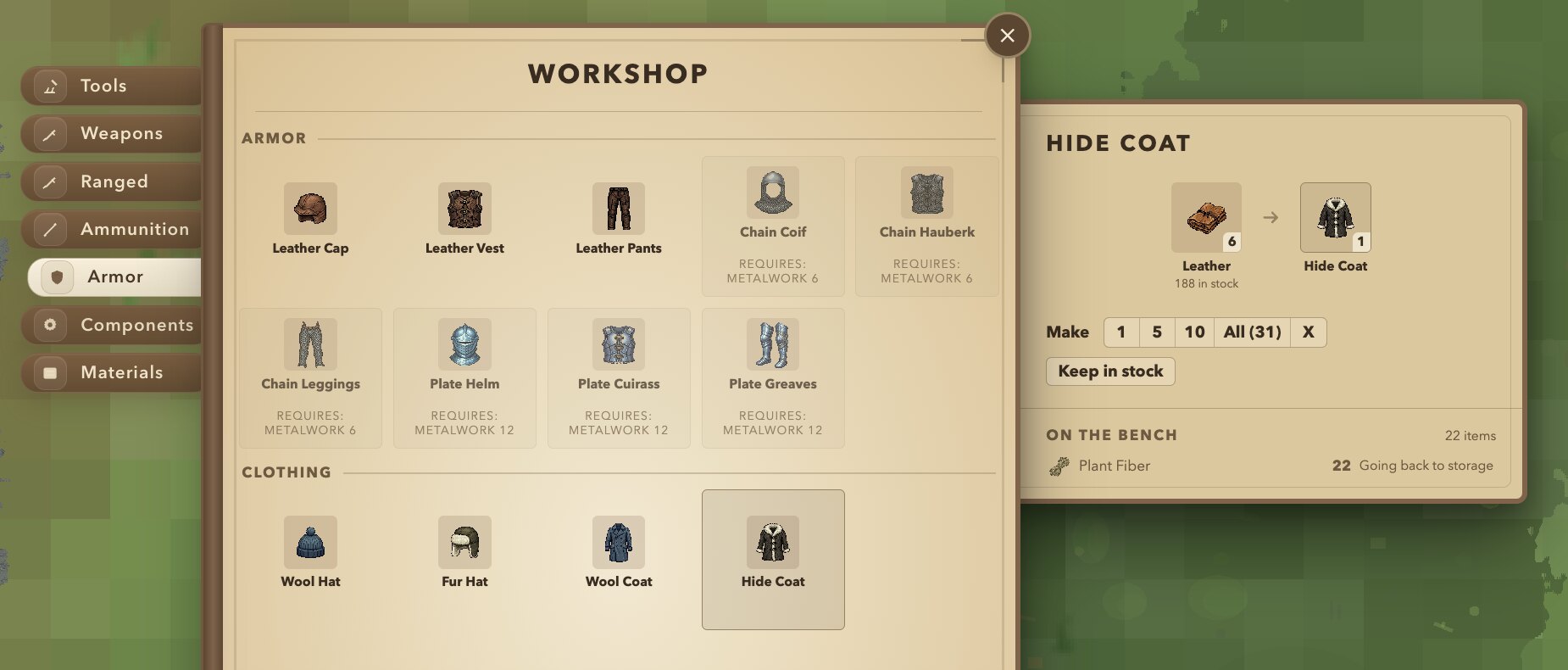
For clothing, Weaving and Tanning unlock warm coats and hats. Pawns manage their own wardrobes without needing orders, putting coats on when they feel cold and storing them when the weather warms up. A coat goes where armor goes, so in winter most pawns wear coats and soldiers keep their armor.
Sound
Encamp had no sound effects at all before this update. Now a camp is full of the sounds of daily work, fighting, and the rain overhead. Pawns also chat to each other in a made-up language as they pass by or sit together.
Medicine and Sickness
Before October, medicine in Encamp was a shelf of potions. A hurt pawn went to bed and was whole a minute later, while a sick pawn threw up twice and went back to work.
Wounds now take time to heal, and the quality of care decides how long they take. A wound that a doctor has tended, with the patient resting in bed, heals far faster than one bound with grass in the field while the pawn keeps chopping wood. A wound left dirty can fester and kill. Still, nothing becomes impossible without a doctor, and a colony with no medic at all will still pull through, just slowly and with some deaths along the way.
Illnesses like gut sickness now run a course, and a doctor has to examine the patient to find out what they have. Sickness also travels through the colony's social life, passing between pawns when they eat or talk together. Keeping the sick apart works, at the cost of leaving them lonely.
Animals and Kitchens
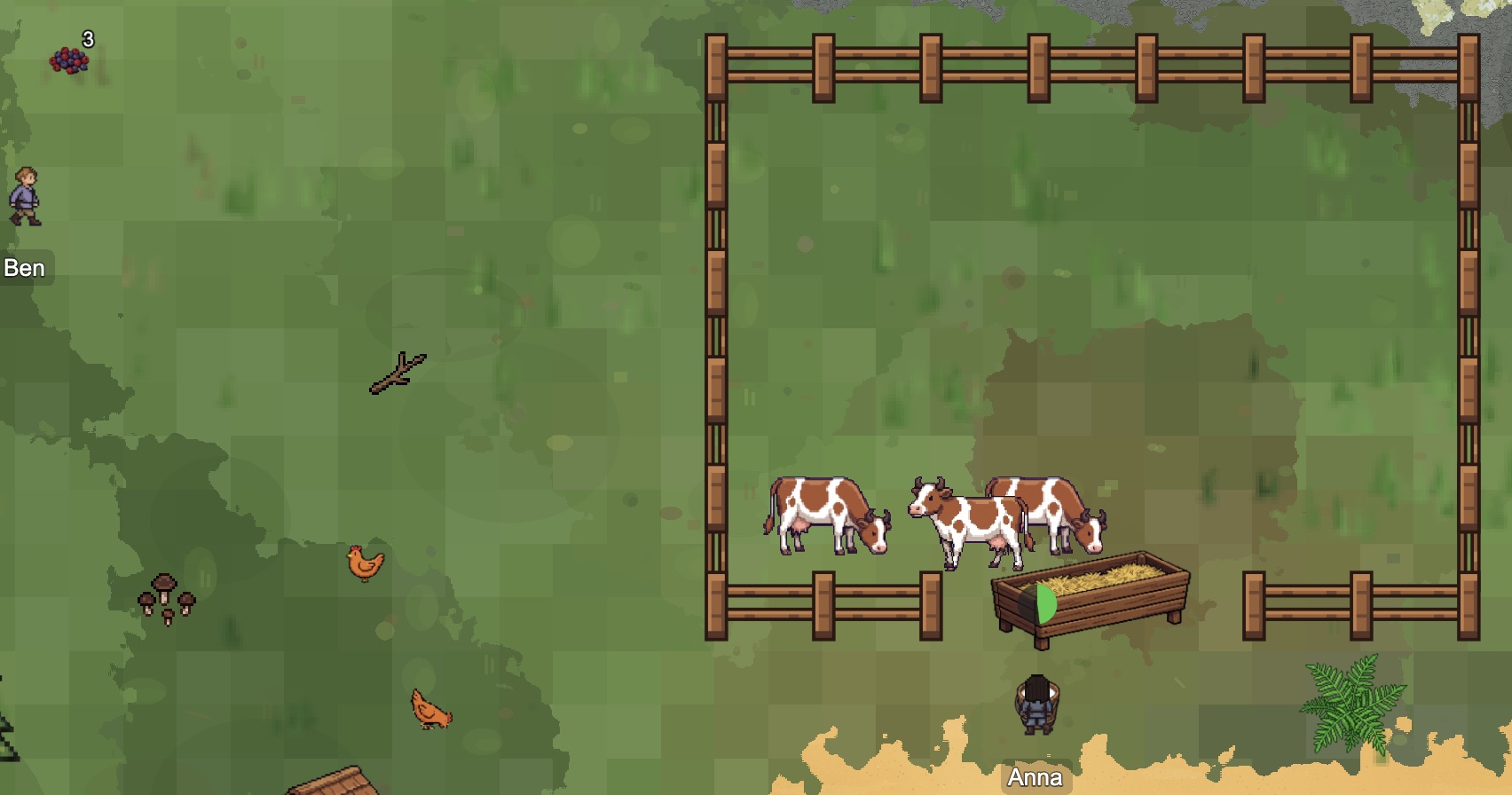
A chicken coop's hens used to be a number on the building's info panel, with a few decorative chickens around the yard. Now farm animals actually live in the base on a daily routine, and they come to the work: when a cow is due for milking, it walks over to its trough and waits for the farmer. Inside the base, a pen feeds its animals from grass and grain in the trough, and a pen short of feed goes Hungry, then Thin, and starts losing animals one at a time.
Kitchens got a similar move away from abstract numbers. Previously, kitchen upgrades were just "build this to cook faster". The goal in October was a kitchen that pawns actually walk around and use, with dishes cooked in steps across different stations, turning the room layout into a small puzzle.
Meals now come out rated from Terrible to Excellent, and a better kitchen and a better cook make better meals.
Dark Days
When a pawn hits a breaking point, they now act on the specific reason they are unhappy: a grieving pawn sits at a grave, while a pawn with a grievance downs tools until it is fixed. A single miserable pawn can drag down the people around them, and a colony left miserable for long enough can face mutiny.
A harder problem showed up when a three-pawn colony lost a fight with a wolf pack. All three pawns were downed, and came out of it near death, starving, and mourning someone they loved. Every one of them broke at once and went on leave. Because a pawn on leave refused every order, nobody worked, and because nobody was working, the Signal Pyre stopped counting toward the next newcomer. The player could only watch.
Losing one fight no longer breaks a colony beyond saving, and a small colony close to breaking now gets a Falling Apart card with a few ways out, like sitting down together or burning wood to send for help. The pyre also keeps counting while pawns are on leave, and you can call a pawn back to work at the cost of some mood.
Trades and Fewer Materials
Pawns used to be interchangeable. Every pawn could do every job and leveled every skill at about the same pace, which meant losing a pawn cost a pair of hands, not a person. In October, most pawns became specialists in a single trade, with the rest as all-rounders, and recruits from the Signal Pyre were set to fill whatever trade the colony was missing.
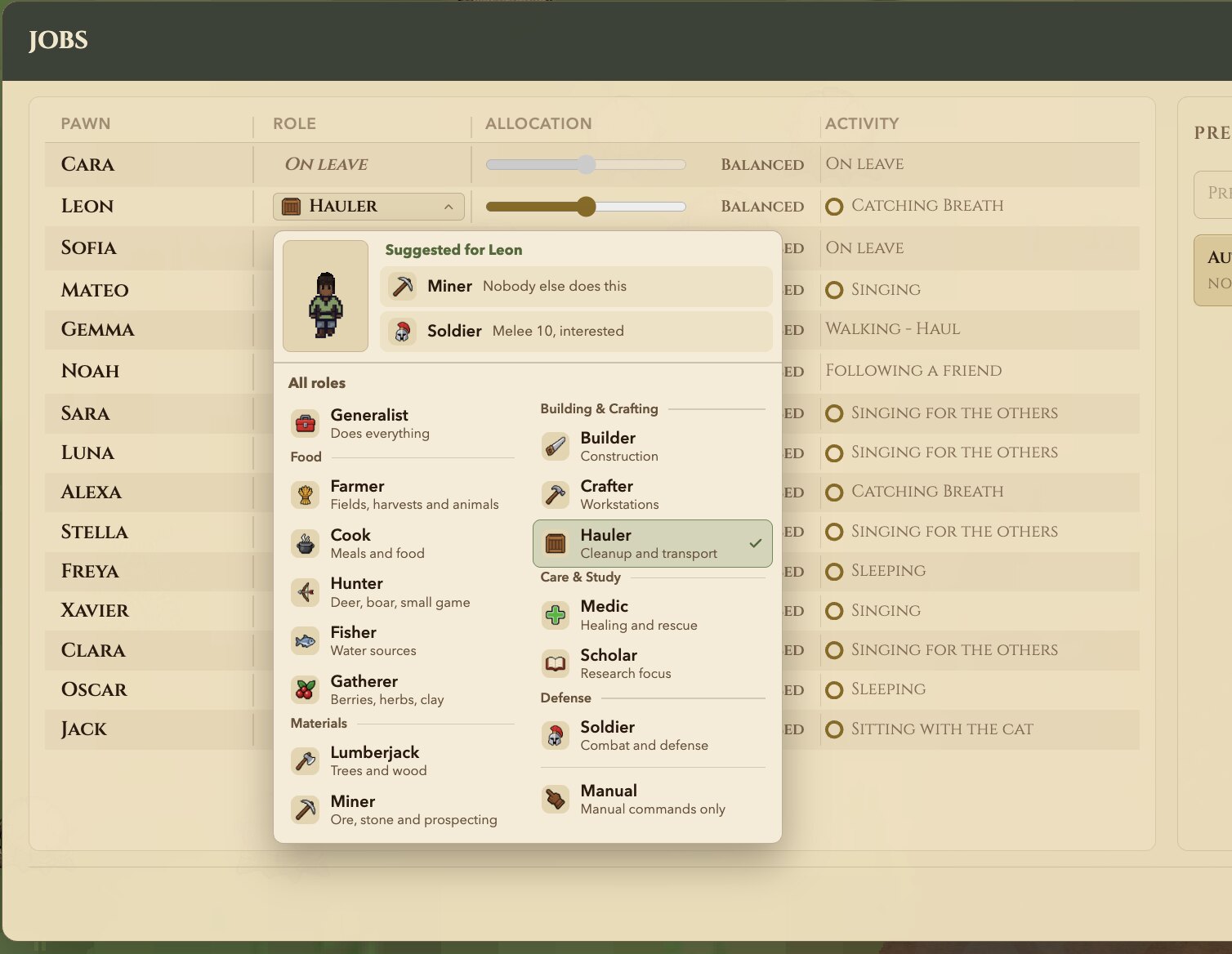
So where did that leave small colonies? In trouble, mostly. A small camp suddenly needed a trained specialist for almost everything before work further down the crafting chain could move at all. Worse, even bullets needed ore that only a skilled miner could dig.
In early November this was loosened up, and several redundant ores and metal bars were trimmed back. Any pawn with a pickaxe can now mine the common ores. Any pawn can also pitch in on the basic work of another trade, just at a slower pace and without learning from it, while specialists stay as the people who make things well.
Perk trees were also reworked, and Timber! now drops a felled tree for four times the wood. Finishing a perk branch now earns the pawn a title under their name, like Field boss or Head librarian.
The First Hour and Neighbours
New colonies used to start alone, far from anyone, in a game that promises a shared world. Most of the time nobody else was online, and the big colonies other players had built were far out of sight.
Now a new colony starts a short walk from another player's camp, whether that owner is online or not, with the neighbor's name visible at the edge of the screen. One of the first goals, The Neighbours, sends a pawn over to leave a note or a gift of food, which the owner reads the next time they log in.
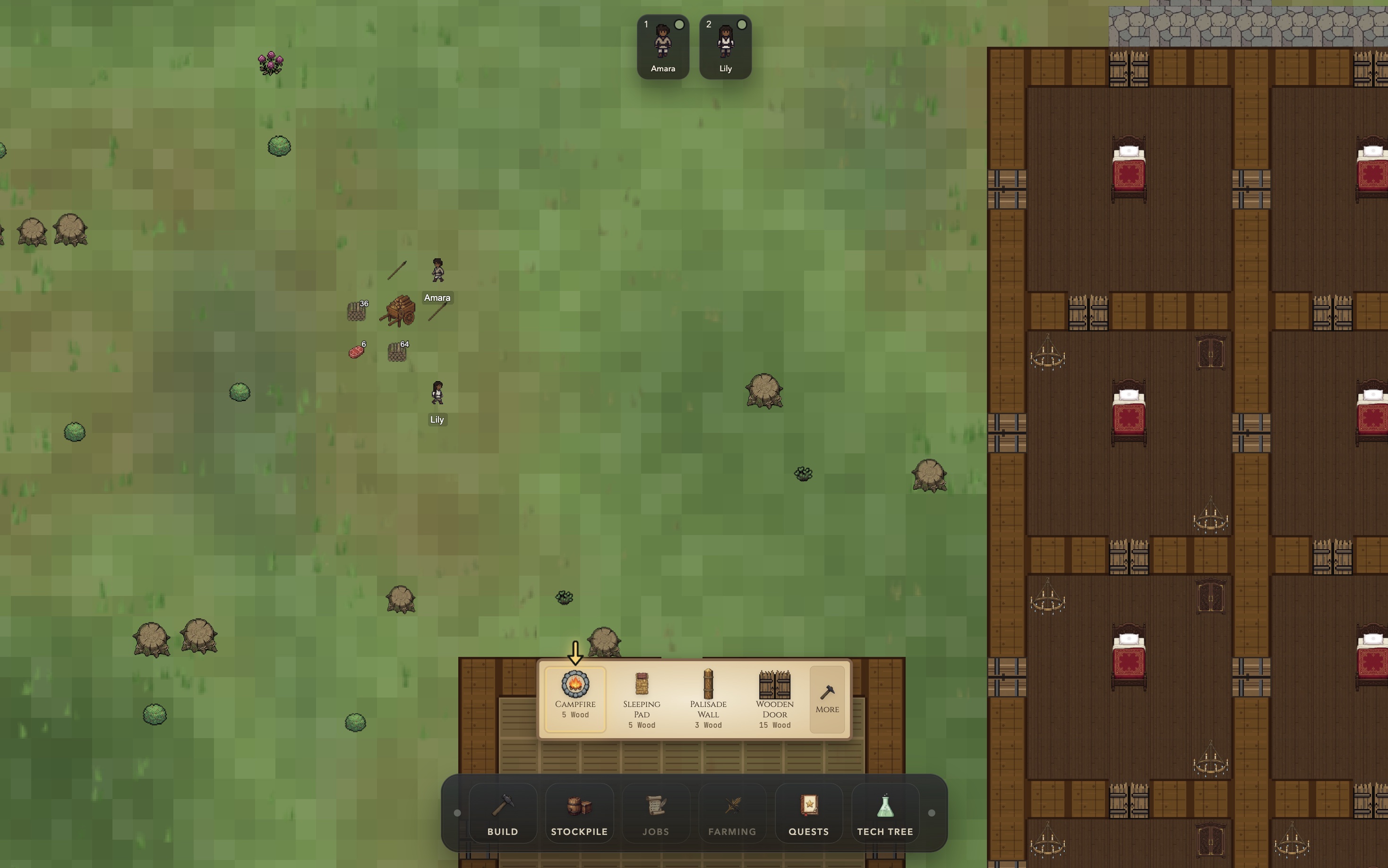
Two other early hurdles were smoothed out for young camps. First, the opening raid often came before a new colony had found its feet, so new colonies now get two full hours before seeing a real raid. Second, colonies were stalling out at five or six pawns right after building the library, so the next recruit from the Signal Pyre now arrives in half the wait after the library goes up.
Other Changes
- Raids now gather far out of sight and wait before attacking, with an alert that moves the camera to them when clicked.
- A round of drinks at the table eases fear and loneliness, though a pawn who drinks alone can become a drinker.
- Restart Colony lets you move your camp to a new site while keeping your pawns and most of your research.
- Game updates now pause the world for about three seconds instead of twenty.
- Pawns now practice seven free-time hobbies, and the Music and Painting techs add guitars and easels for making wall art.
- Enemy dead go into a Body Pit to burn, bury, or leave for scavengers, while Warning Posts can break a raiding faction's nerve.
- Storage now works by weight with visible goods on shelves, separate log and stone piles, and upgradable storerooms, and raiders go for your richest store.
- Watchtowers give archers and gunners extra range from above, and spike traps can guard the approach.
- A new Hunter role and hunting job join deadfall traps and fish weirs for bringing in meat and fish.
- Water now has animated surf and foam along sand, dune, shingle, cliff, and salt marsh coasts.
- Pawns can fish by hand without a rod, and Fish here marks water for the colony to work.
- Farmers can save their best crop lines in a seed vault and breed hardier plants, while irrigation channels now connect at corners and crossings.
- Crowded barracks and cramped rooms now hurt mood, so a growing colony needs proper bedrooms.
- Passing merchants now tailor their offers to what your colony has researched and what you already have in stock.
- Haulers can push a handcart to carry much heavier loads at a slower walk, and gatherers can pick up loose twigs, stones, herbs, and fiber.
- The Jobs panel now lets you set resource limits so gatherers stop once you have enough wood, stone, or other materials.
- The build menu now has tabs, a search box, and a short description for every building, plus a warning when a blueprint gets walled in.
- Pawns now have 24 hairstyles and beards, and they shout out perks when they trigger, like "Timber!" when a tree falls.
- Placing two doors side by side makes a sliding double door, and right-clicking a set table lets a selected pawn eat a specific dish.